Features and Elegance of Ilex Aquifolium,
Commonly known as English holly or European holly, is an evergreen shrub or small tree native to western Europe (Ireland included). It is well-known for its glossy green leaves, red berries, and traditional holiday symbolism. Here’s a description, information on its usage, and care guidelines:
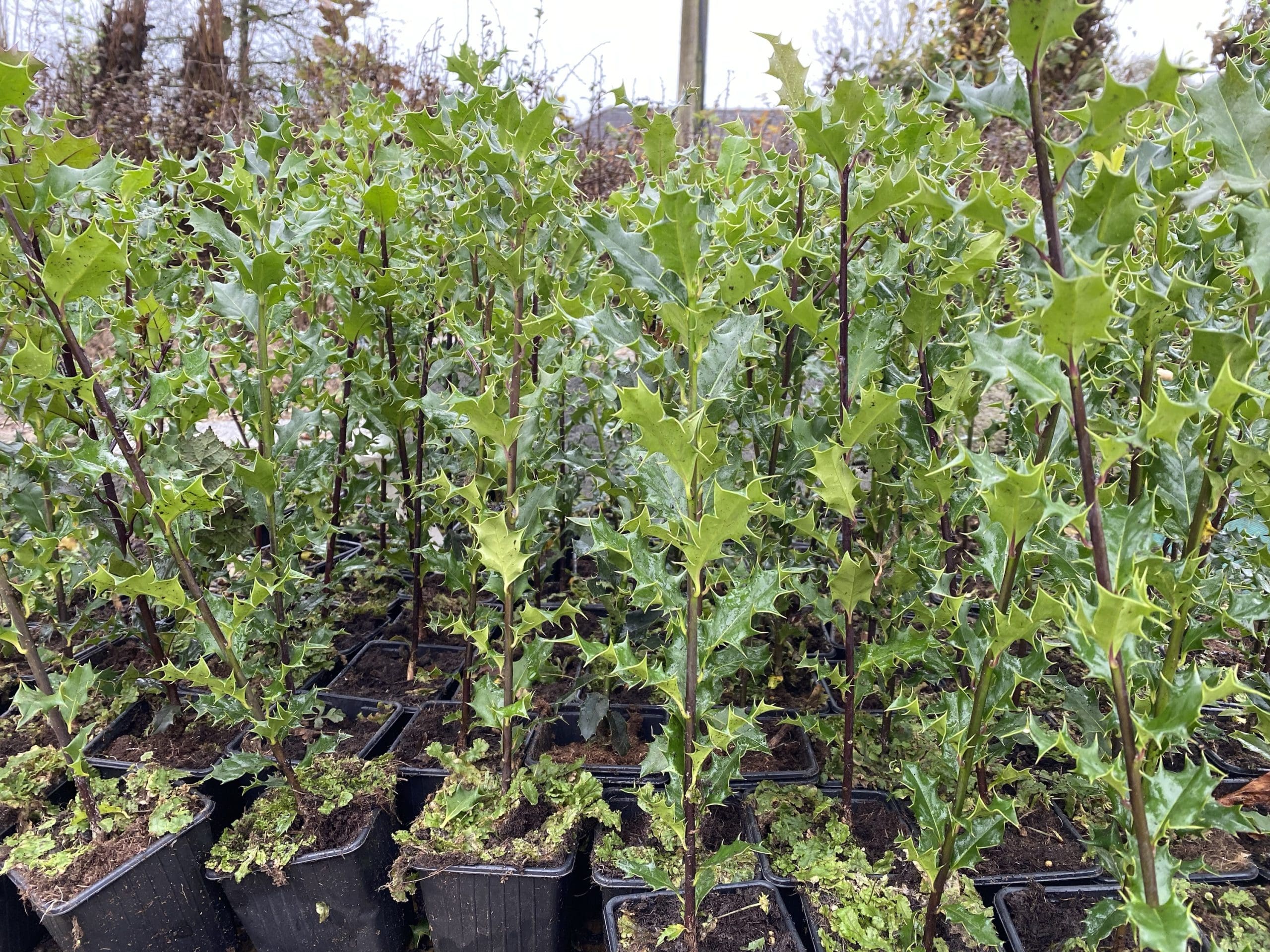
Appearance: Ilex Aquifolium is an evergreen shrub or small tree that can reach a height of 10-15 meters (30-50 feet) in favourable conditions. It has a dense, compact growth habit with spiny, glossy dark green leaves.
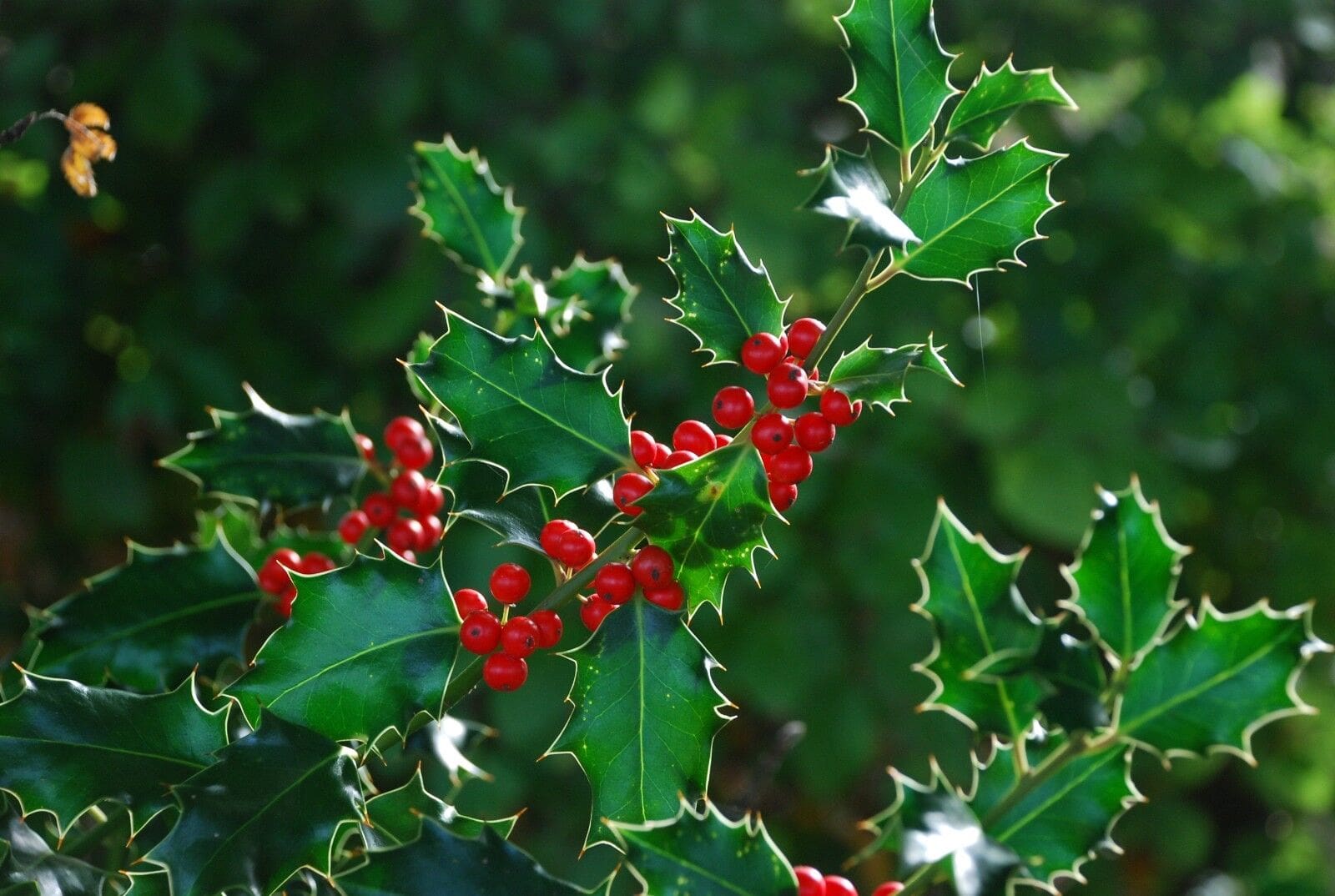
Leaves: The leaves are leathery, elliptical, and typically have spiny margins, making them a characteristic feature of the plant.
Flowers: Small white flowers with four petals bloom in spring. These flowers are often inconspicuous compared to the more prominent berries.
Berries: Female plants produce red berries that persist through the winter months, providing a pop of color during the colder seasons.
Habitat: English holly thrives in well-drained soils and is commonly found in woodlands, hedgerows, and gardens.
European Holly: An Iconic Touch to Your Landscape:
Ornamental Plant: Ilex Aquifolium is widely cultivated as an ornamental plant for its attractive glossy leaves, vibrant berries, and evergreen nature.
Holiday Decor: The red berries of English holly are a classic decoration during the winter holiday season, often used in wreaths, garlands, and centrepieces.
Wildlife Attraction: The berries serve as a valuable food source for birds during the winter when other food options are scarce.
Privacy Hedge: Due to its dense growth habit, English holly can be planted as a privacy hedge or screen.
Traditional Symbolism: English holly has cultural and symbolic significance in various traditions, often representing protection and continuity.
Planting and Caring for European Holly Bareroot Trees:
Planting: Choose a location with well-draining soil and partial to full sun. Ensure proper spacing to accommodate the plant’s mature size.
Watering: Water newly planted holly regularly to establish a strong root system. Once established, it becomes relatively drought-tolerant.
Mulching: Apply a layer of mulch around the base of the plant to retain moisture, suppress weeds, and maintain even soil temperatures.
Pruning: Prune in late winter or early spring to shape the plant and remove any dead or damaged branches. Wear gloves to protect against the spiny leaves.
Fertilization: Holly plants generally do well without excessive fertilization. If the soil is poor, apply a balanced, slow-release fertilizer in spring.
Pest and Disease Management: Watch for pests like scale insects and diseases like leaf spot. Proper spacing and good air circulation can help prevent issues.
Propagation: Holly can be propagated through cuttings or by collecting and planting the seeds from the berries.
Delivery Times Ireland 3-5 working days