Rowan Tree Bareroot Tree: Adding Captivating Beauty to Your Garden
Scientifically known as Sorbus aucuparia, is a deciduous tree native to Europe and parts of Asia. It’s known for its distinctive pinnate leaves, clusters of small white flowers, and vibrant red or orange berries. Here’s a description, information on its usage, and care guidelines:
Features and Significance of Rowan Tree Bareroot Trees
Appearance: Rowan trees are small to medium-sized, typically reaching heights of 5-15 meters (16-49 feet). They have a rounded crown and a slender trunk covered in smooth, gray-brown bark.
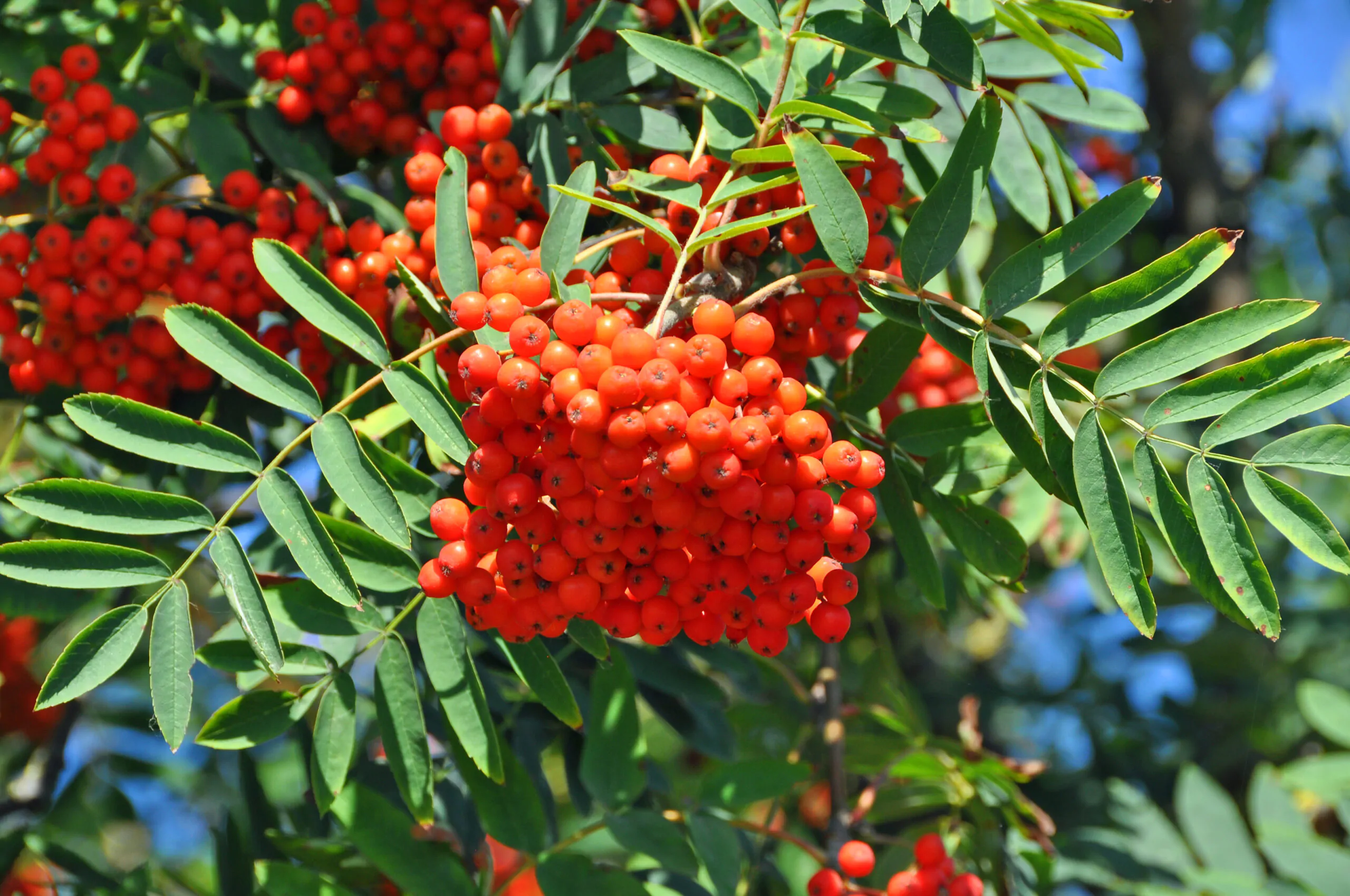
Leaves: The leaves are pinnate, with 5-8 pairs of leaflets arranged along a central stalk. The leaflets are serrated and have a slightly toothed edge.
Flowers: Rowan trees produce clusters of small, white flowers in late spring to early summer. These flowers are attractive to pollinators like bees.
Berries: One of the most notable features of rowan trees is their berries, which are small and bright red or orange. They appear in late summer and often persist into the fall, providing a burst of color.
Habitat: Rowan trees are often found in upland and mountainous areas, as well as woodlands, hedgerows, and urban landscapes.
Usage of Rowan Tree
Ornamental Plant: Rowan trees are cultivated for their ornamental value. They bring color and beauty to gardens and landscapes, particularly in the fall when their berries are prominent.
Wildlife Attraction: The berries of rowan trees are a food source for birds and various wildlife species, especially during the colder months.
Traditional Uses: In many cultures, rowan trees have held symbolic and protective significance. Their branches were often used to ward off evil spirits or bring good luck.
Edible Uses: While the berries are often quite bitter and astringent when raw, they can be used to make jellies, jams, and even a type of fermented beverage.
Woodworking: The wood of rowan trees is hard and fine-grained, and it has been used for small woodworking projects.
Planting and Nurturing Symbolic Rowan Tree Bareroot Trees
Planting: Choose a sunny to partially shaded location with well-draining soil. Plant in the spring or fall, and provide adequate space for the tree’s growth.
Watering: Water newly planted rowan trees regularly to establish their root system. Once established, they are relatively drought-tolerant.
Mulching: Apply a layer of organic mulch around the base of the tree to conserve moisture, regulate soil temperature, and suppress weeds.
Pruning: Prune as needed to remove dead or diseased branches and shape the tree. Rowan trees generally have an attractive natural shape.
Fertilization: Established trees typically do well without heavy fertilization. If the soil is poor, you can apply a balanced fertilizer in the spring.
Pest and Disease Management: Keep an eye out for pests like aphids and diseases like fire blight. Good air circulation and proper care can help prevent issues.
Propagation: Rowan trees can be propagated through seeds or cuttings.
Delivery Times Ireland 3-5 working days